
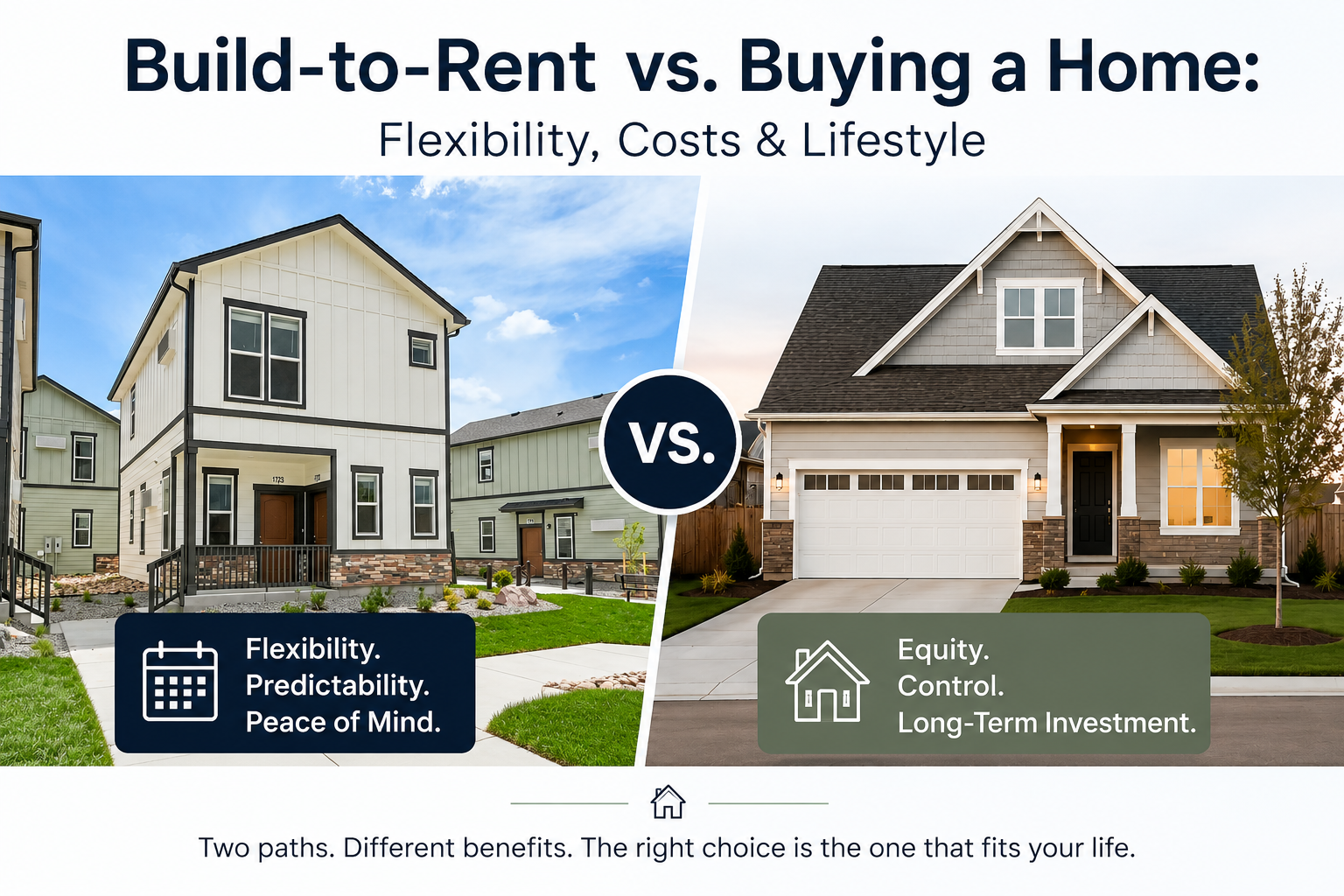
Build-to-Rent vs. Apartments: What’s Actually Different?
August 9, 2026

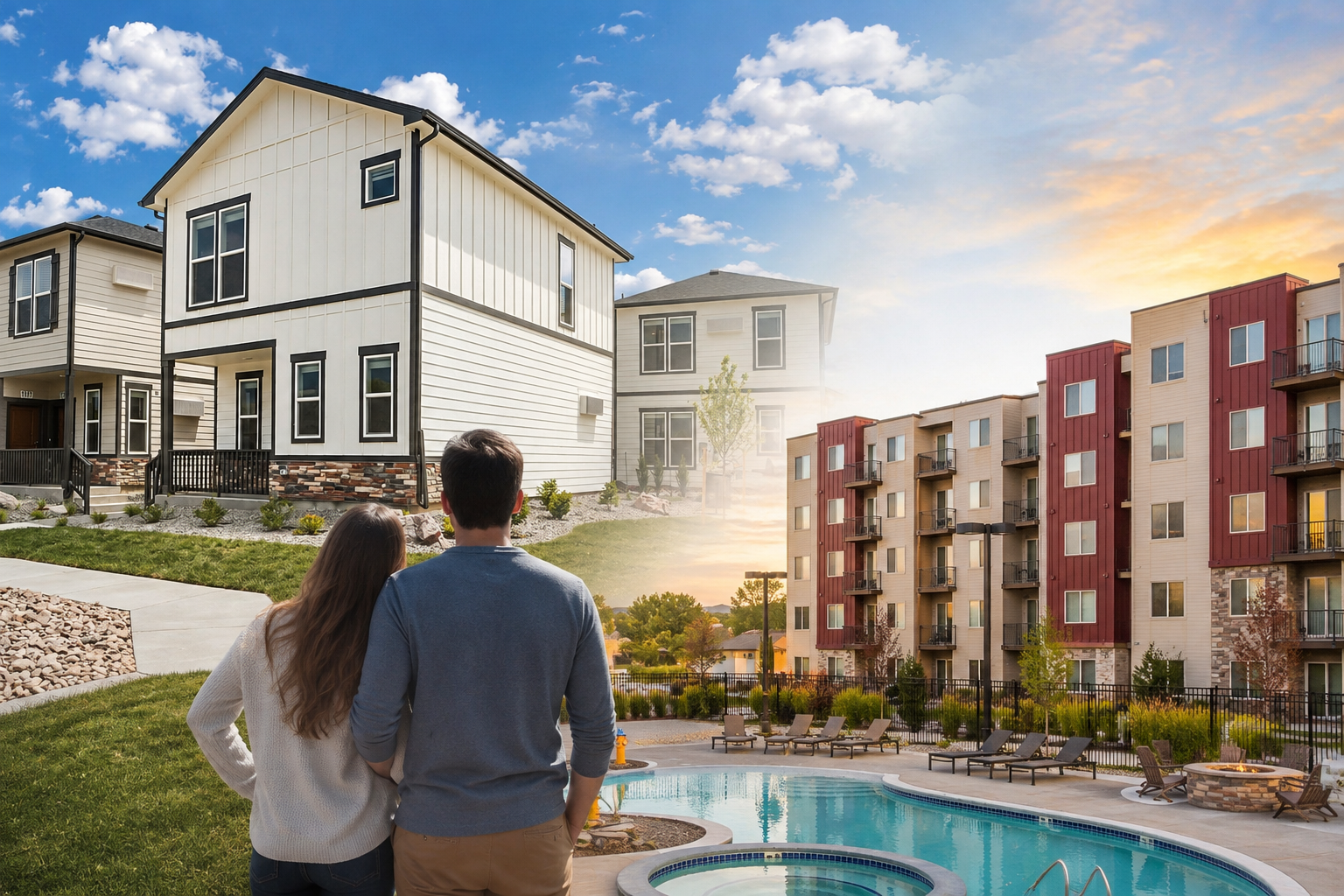
At first glance, a Build-to-Rent community and an apartment community have quite a bit in common. Both offer the flexibility of renting, professional management, maintenance support, and homes within a larger community.
The biggest difference is surprisingly simple:
Build-to-Rent changes what the physical experience of renting can look and feel like.
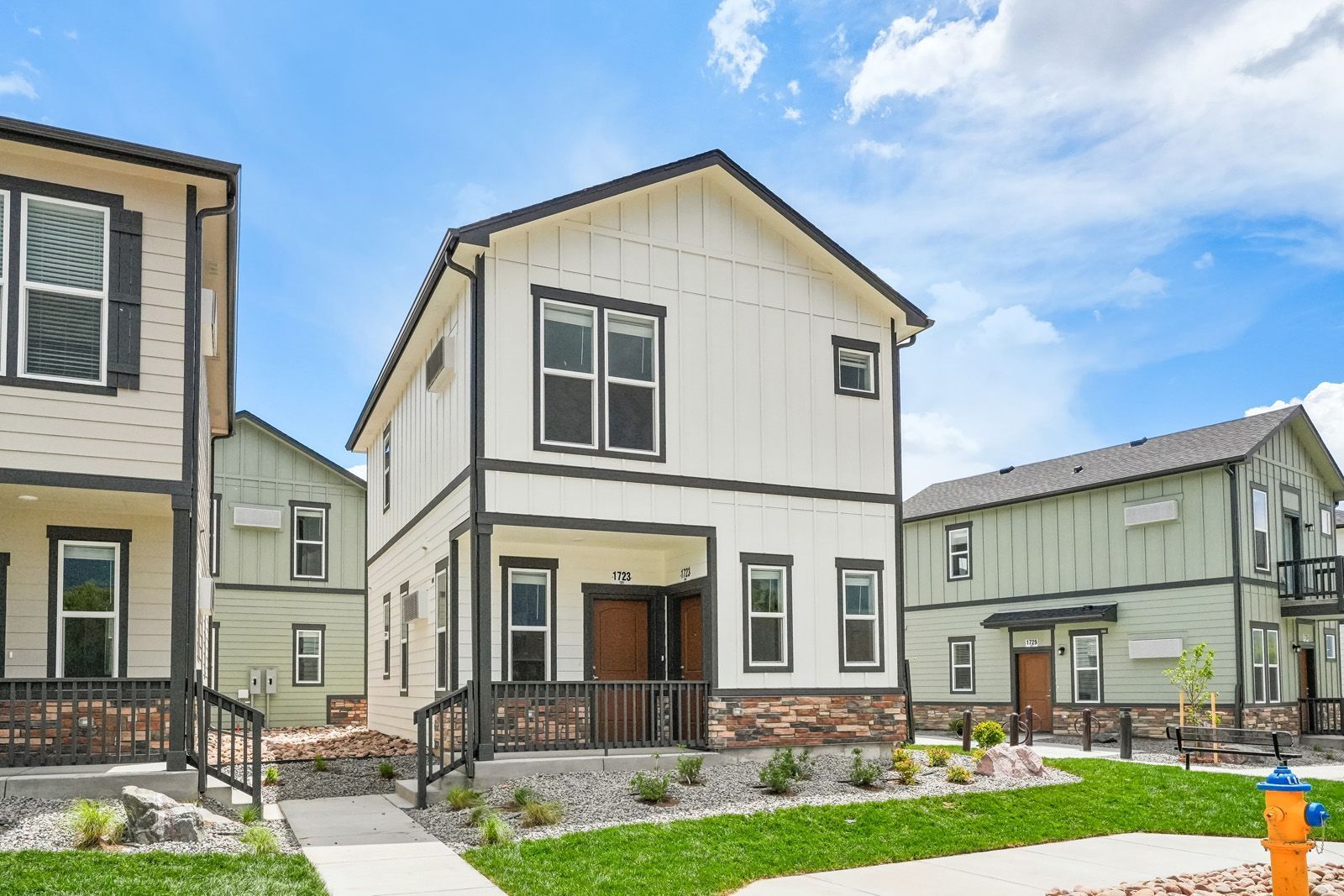
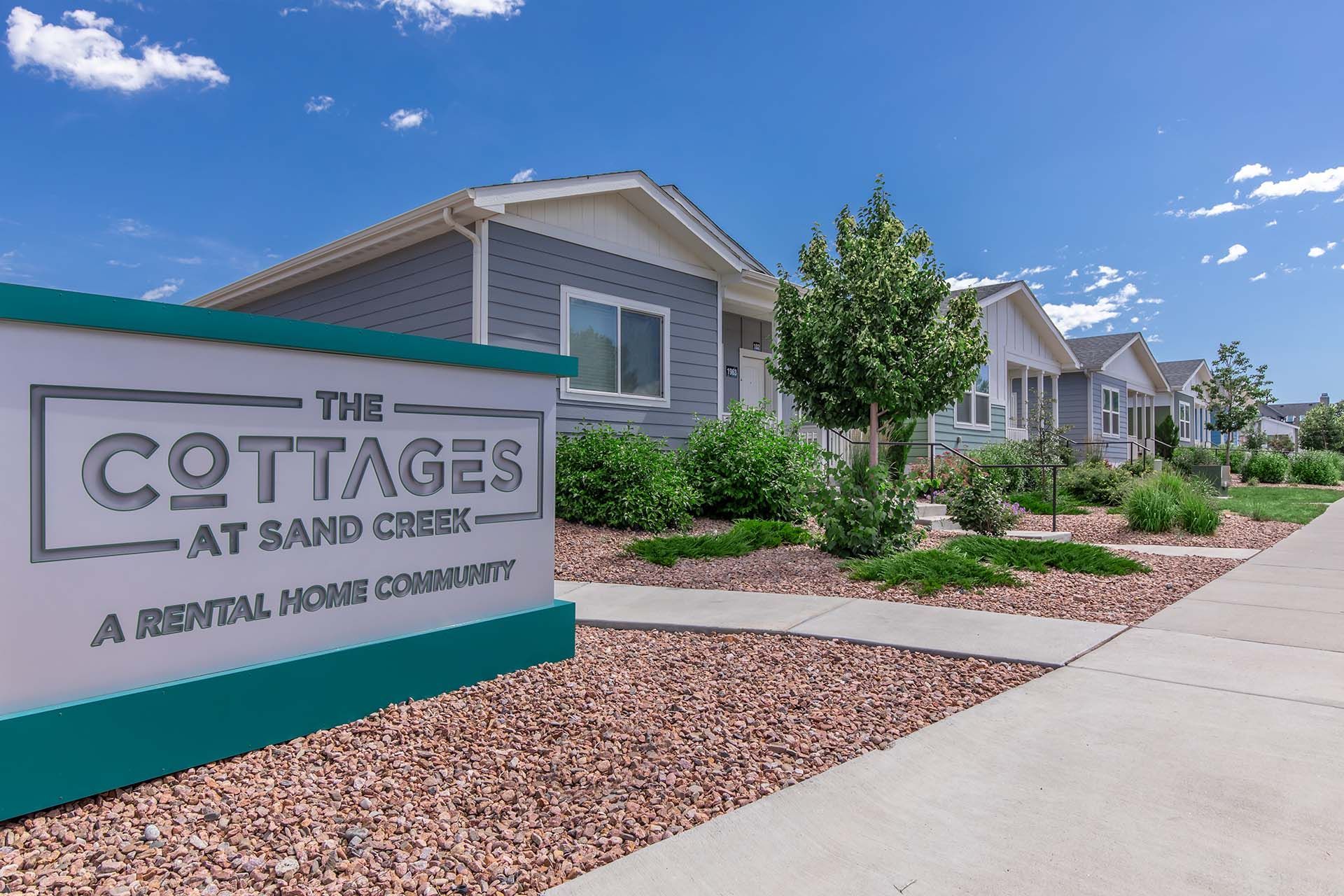
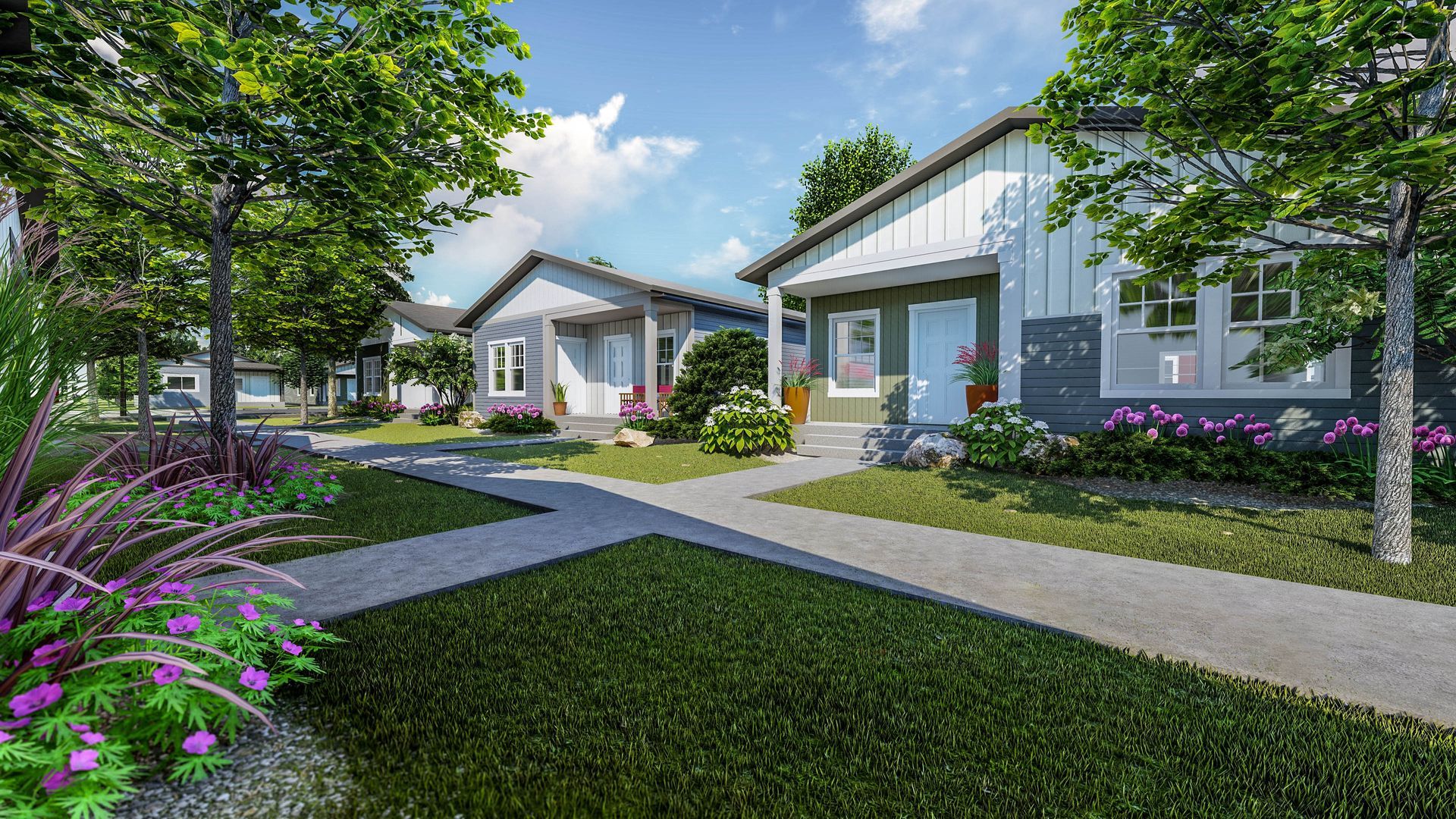
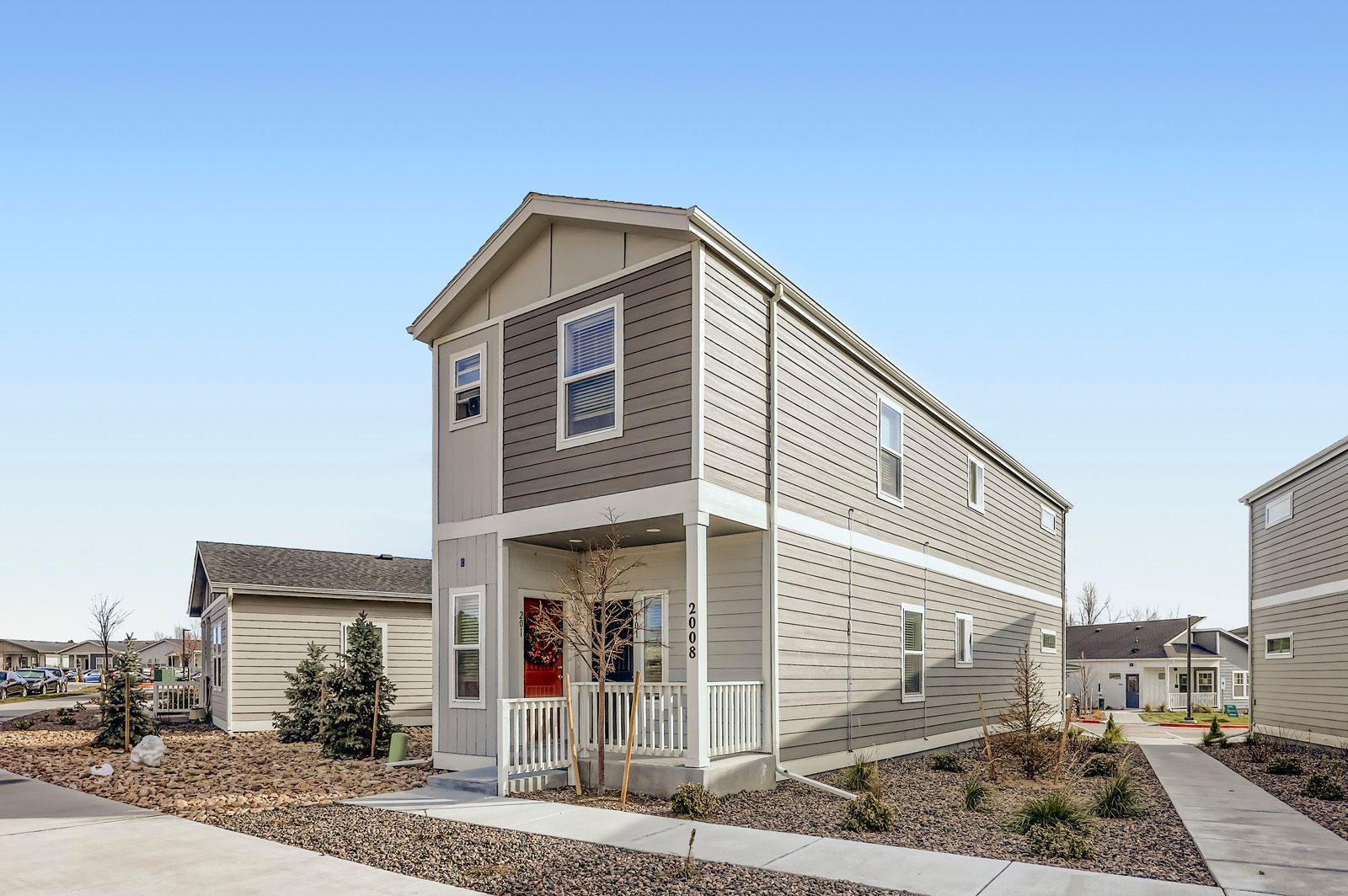
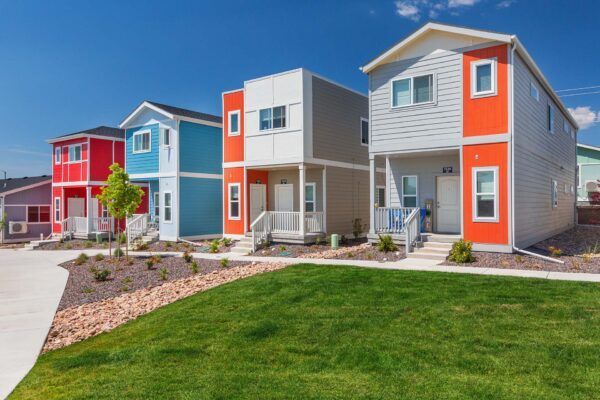
Instead of renting a unit inside a larger multifamily building, residents may rent a detached single-family home, cottage, duplex, or townhome within a professionally managed neighborhood.
That seemingly small distinction can change everything from how you bring groceries inside to where your dog goes in the morning.
Build-to-Rent vs. Apartment Living at a Glance
| Feature | Traditional Apartment | Build-to-Rent Home |
|---|---|---|
| Home Style | Unit within a multifamily building | Single-family home, cottage, duplex, or townhome |
| Entrance | May include shared entrances, hallways, or elevators | Typically a private exterior entrance |
| Shared Walls | Common | Often fewer; detached BTR homes may have none |
| Outdoor Space | Balcony, patio, or shared grounds may be available | Private patio or yard may be available |
| Parking | Surface parking, covered parking, or garage options | Dedicated parking or private garage may be available |
| Living Space | Efficient apartment-style floor plans | Often designed to feel more like a traditional home |
| Pets | Pet-friendly options vary | Home-style layouts and outdoor access can be especially appealing to pet owners |
| Community Amenities | Often extensive shared amenities | Varies; may combine residential neighborhood features with shared amenities |
| Maintenance | Professionally managed | Professionally managed |
| Lease Flexibility | Rental | Rental |
| Exterior Maintenance | Generally handled by management | Generally handled by management |
| Neighborhood Feel | Multifamily community | Often designed more like a residential neighborhood |
Features and amenities vary by individual community, home type, and location.
The important takeaway isn't that one housing type is universally better than the other.
It's that renters now have more choices.
The Biggest Difference Is Privacy
For many renters considering Build-to-Rent, privacy is one of the first differences they notice.
Traditional apartment living naturally puts more people within the same building. Depending on the property, you might have neighbors beside you, above you, and below you. You may share hallways, staircases, elevators, entrances, parking areas, and other common spaces.
That's simply part of multifamily living - and for many residents, the convenience and social environment are part of the appeal.
Build-to-Rent approaches density differently.
A detached BTR home may have no shared walls at all, while duplexes and townhomes generally have fewer adjoining neighbors than a typical apartment.
Residents also commonly enter their homes directly from outside rather than through a shared interior corridor.
That creates an experience much closer to living in a traditional residential neighborhood.
There may still be neighbors nearby, community spaces, and shared amenities, but when you close your front door, your home can feel distinctly more private.
Your Front Door Changes More Than You'd Think
Having your own exterior entrance sounds like a small detail until you think about how often you use it.
Imagine coming home with groceries.
Taking the dog outside at 6:00 a.m.
Helping kids load into the car.
Having friends over.
Receiving a large delivery.
Walking outside with your morning coffee.
In many Build-to-Rent homes, you simply open your front door and step outside.
There's no lobby to cross, elevator to wait for, or interior hallway between your living room and the outdoors.
For households accustomed to living in a single-family home, that experience can feel familiar immediately.
And for longtime apartment residents, it can be one of those lifestyle differences they didn't realize they wanted until they experienced it.
Outdoor Space Becomes Part of the Home
One of the most meaningful differences between apartments and many Build-to-Rent homes is the relationship between indoor and outdoor living.
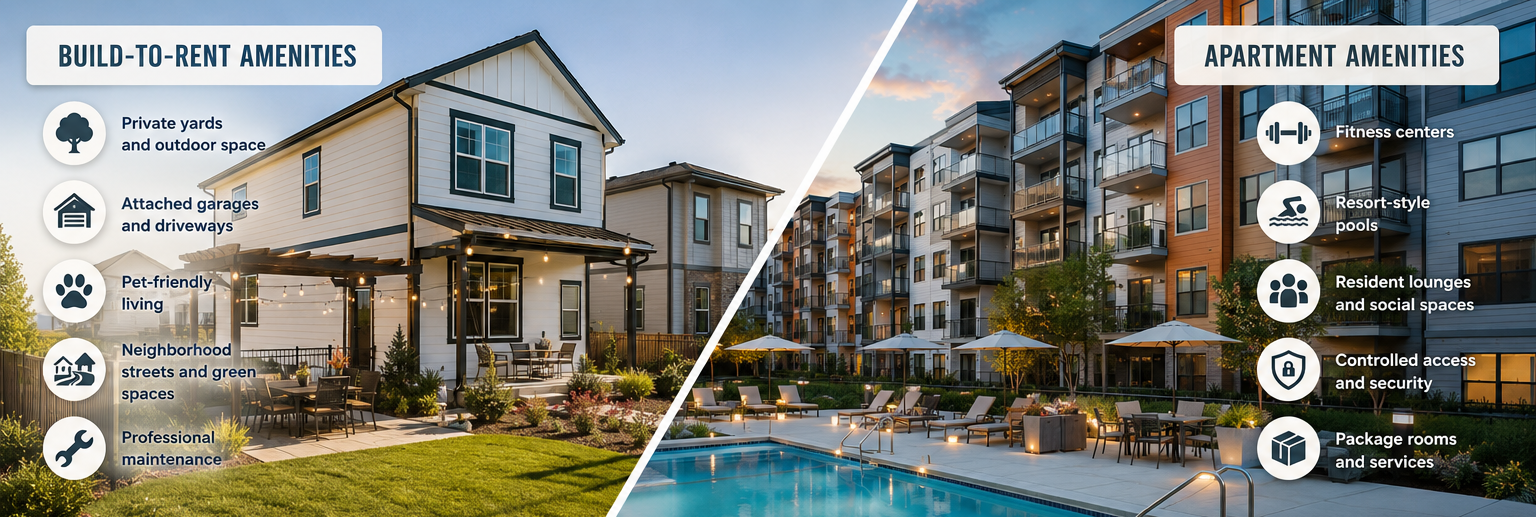
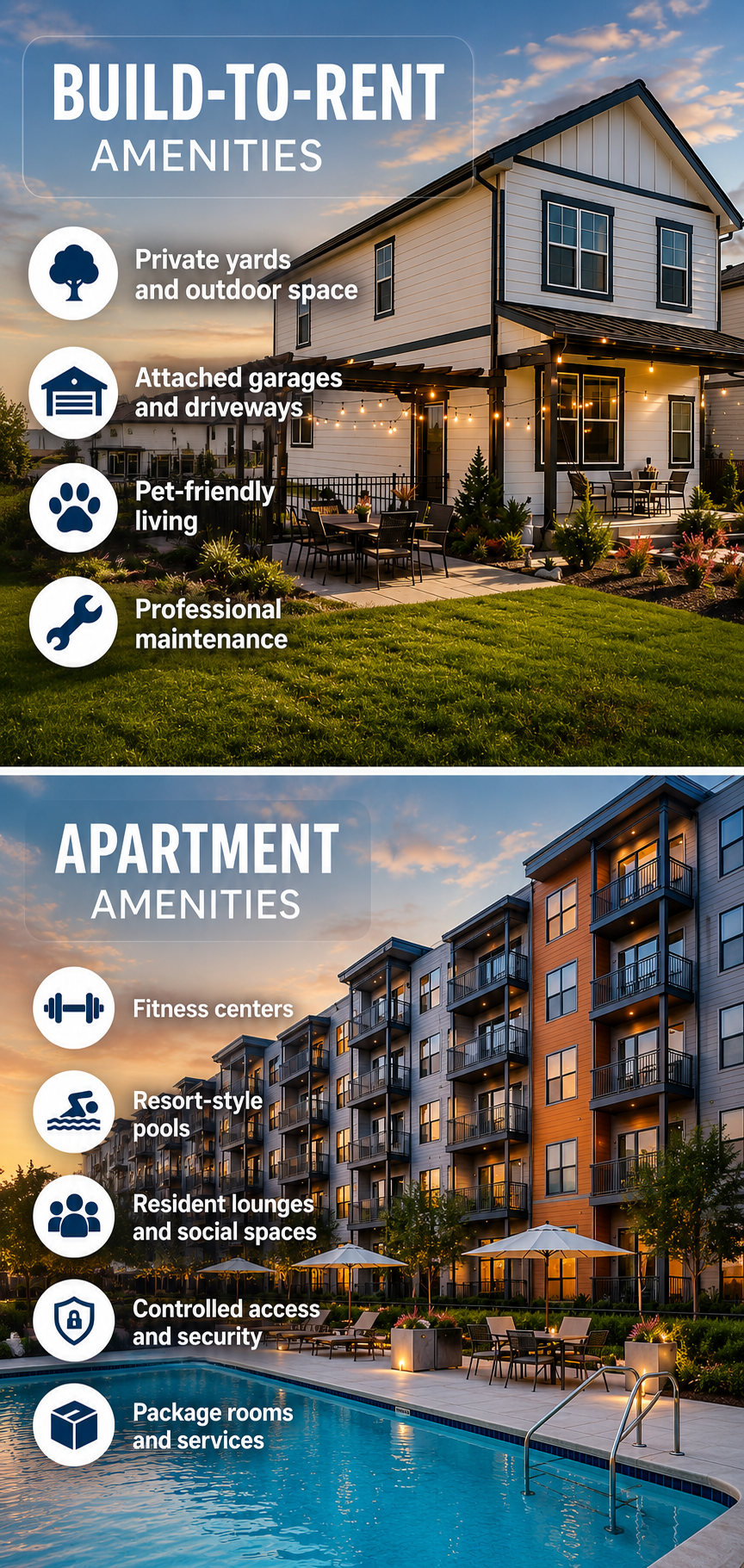
Apartment communities frequently provide impressive outdoor amenities—pools, courtyards, grilling stations, dog parks, walking areas, and gathering spaces. Individual homes may also include balconies or patios.
Build-to-Rent can add another layer: private outdoor space.
Depending on the community and home, that could mean a patio, porch, fenced yard, or other outdoor area connected directly to the residence.
For a dog owner, that can mean easier trips outside.
For parents, it can mean another place for children to play.
For someone who loves gardening, it might mean room for a few planters and herbs.
And sometimes it simply means having a private place to sit outside at the end of the day.
You don't have to own a house to appreciate having a little piece of outdoors that feels like yours.
Build-to-Rent Can Offer More of the "House Stuff"
There's an entire category of everyday conveniences that rarely makes someone's apartment-search checklist but becomes increasingly important as life changes.
Where do you put the bikes?
What about camping equipment?
Where does the stroller go?
Can you keep holiday decorations somewhere other than a bedroom closet?
Where do you unload groceries when it's snowing?
Where does your visiting family park?
Traditional apartments address these needs in different ways, often through storage units, garages, reserved parking, larger floor plans, or other community features.
Build-to-Rent homes are frequently designed around the assumption that residents may have more belongings—and need the functional spaces associated with living in a house.
Depending on the community, homes may offer garages, driveways, larger closets, additional bedrooms, storage areas, and more traditional residential layouts.
For someone moving from homeownership, these details can make downsizing feel much less like sacrificing.
For someone moving up from an apartment, they can make BTR feel like gaining an entirely new level of freedom.


What About Amenities?
This is one area where apartments can have a significant advantage - and it's worth acknowledging.
Modern apartment communities can offer remarkable amenity packages: resort-style pools, sophisticated fitness centers, coworking spaces, lounges, rooftop decks, entertainment rooms, package services, and much more.
Build-to-Rent communities vary significantly.
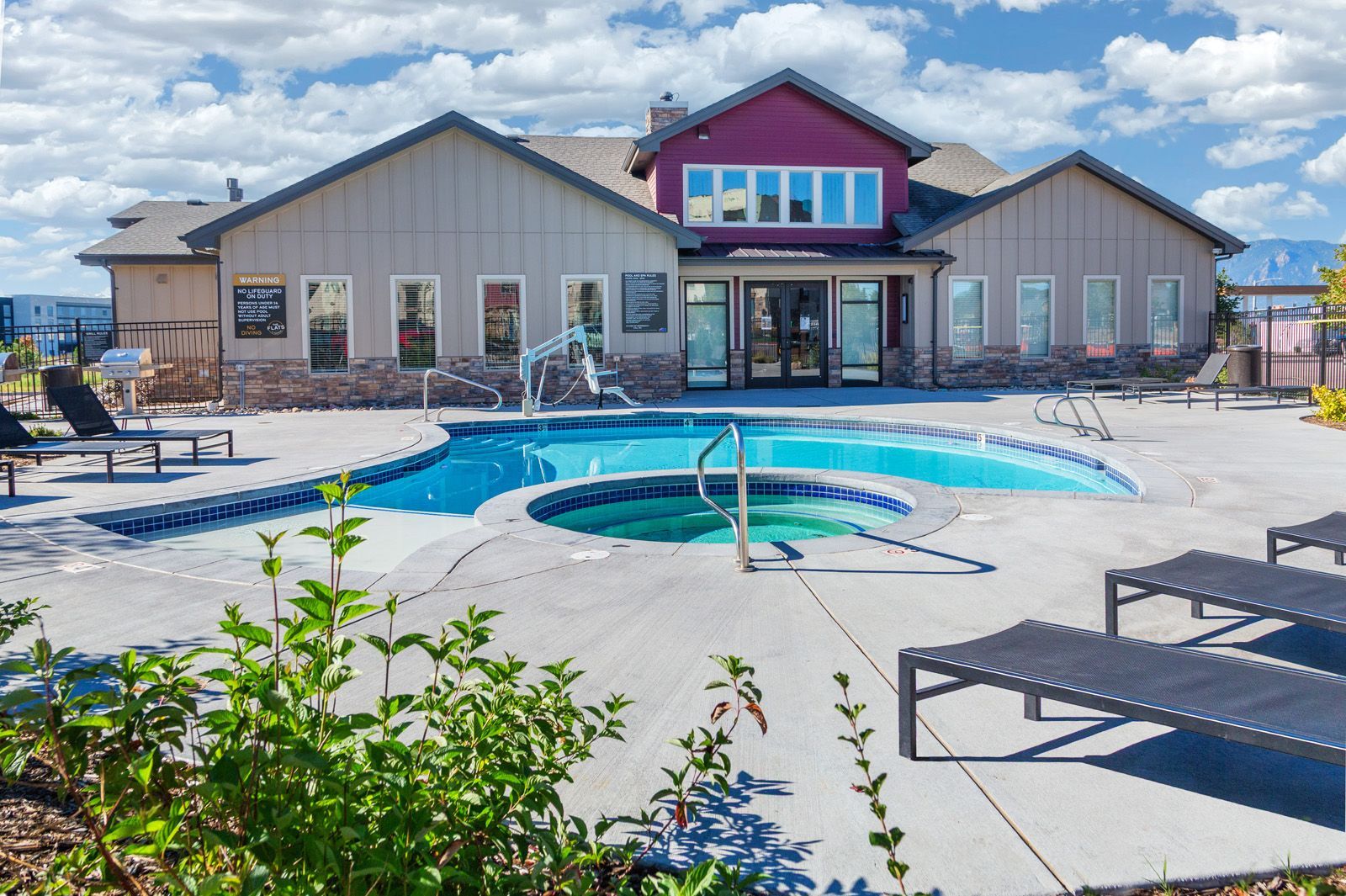
Some focus primarily on the homes and neighborhood environment. Others provide robust shared amenities of their own, including pools, fitness centers, clubhouses, dog parks, walking areas, and community gathering spaces.
The better question isn't:
"Which has more amenities?"
It's:
"Which amenities will I actually use?"
Someone who uses a fitness center every morning and loves having multiple social spaces might prioritize an amenity-rich apartment community.
Someone whose idea of the perfect amenity is a garage, private yard, and fewer shared walls might value Build-to-Rent more.
The number of amenities matters far less than whether those amenities improve your everyday life.
Both Give You Something Homeownership Doesn't: Professional Maintenance
This is where Build-to-Rent and apartments come back together.
When you own a home and something breaks, the problem belongs to you.
The furnace stops working?
Your problem.
The water heater fails?
Your problem.
The dishwasher suddenly decides that washing dishes is optional?
Also your problem.
Homeownership can be tremendously rewarding, but maintenance is part of the deal.
With both professionally managed apartments and Build-to-Rent communities, residents generally have access to a maintenance team rather than having to find a contractor, coordinate repairs, or absorb the full cost of replacing major building systems themselves.
Build-to-Rent therefore creates an interesting combination:
You can experience many of the lifestyle characteristics of living in a house without becoming the person responsible for fixing everything that comes with the house.
For former homeowners in particular, that can be one of BTR's most underrated advantages.

Build-to-Rent Isn't an "Upgrade" From Apartment Living
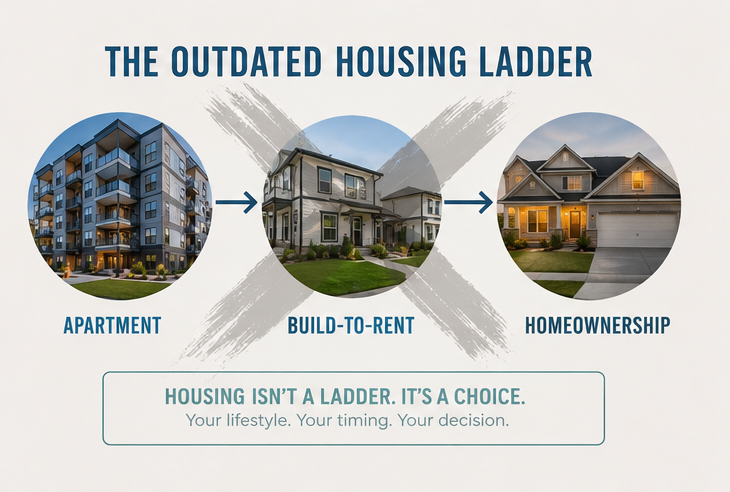
It's tempting to describe the progression as:
Apartment → Build-to-Rent → Homeownership
But that's increasingly outdated.
Housing isn't a ladder everyone needs to climb.

It's tempting to describe the progression as:
Apartment → Build-to-Rent → Homeownership
But that's increasingly outdated.
Housing isn't a ladder everyone needs to climb.
It's a collection of choices that fit different lifestyles at different points in life.
A downtown professional who values walkability, amenities, and proximity to restaurants may genuinely prefer an apartment.
A family wanting bedrooms, a yard, and neighborhood living may prefer Build-to-Rent.
An empty nester may sell a large house and intentionally choose a cottage rental because they want less maintenance without returning to apartment living.
Someone relocating for a new job may want to rent a house for several years before deciding whether to purchase.
And someone else may simply decide that they enjoy renting and have no desire to own property at all.
None of those choices represents moving forward or backward.
They're simply different answers to the same question:
How do I want to live right now?
It's a collection of choices that fit different lifestyles at different points in life.
A downtown professional who values walkability, amenities, and proximity to restaurants may genuinely prefer an apartment.
A family wanting bedrooms, a yard, and neighborhood living may prefer Build-to-Rent.
An empty nester may sell a large house and intentionally choose a cottage rental because they want less maintenance without returning to apartment living.
Someone relocating for a new job may want to rent a house for several years before deciding whether to purchase.
And someone else may simply decide that they enjoy renting and have no desire to own property at all.
None of those choices represents moving forward or backward.
They're simply different answers to the same question:
How do I want to live right now?
So, Should You Choose an Apartment or Build-to-Rent Home?
An apartment may be the better fit if you prioritize efficient living, extensive shared amenities, certain urban or high-density locations, or simply prefer the apartment lifestyle.
A Build-to-Rent home may be worth exploring if you find yourself saying:
- "I'd love a little more privacy."
- "I want fewer shared walls."
- "I really want a yard."
- "We need another bedroom."
- "I wish I had a garage."
- "My dog needs more space."
- "I miss living in a neighborhood."
- "I want a house, but I'm not ready to buy one."
- "I've owned a house—and I don't want the maintenance anymore."
That last group is particularly important.
Build-to-Rent isn't only an alternative for people who can't buy a home.
Increasingly, it's an option for people who have decided they don't need to own one to live the way they want.
The Bottom Line
The difference between an apartment and a Build-to-Rent home isn't simply square footage, a yard, or the number of shared walls.
It's about expanding what renting can look like.
Apartments remain an excellent housing option for millions of people. Homeownership remains the right choice for millions more.
Build-to-Rent creates another path between them—one that combines the flexibility and professional management renters value with many of the characteristics traditionally associated with living in a house.
And once that distinction becomes clear, another comparison naturally follows:
If Build-to-Rent can feel this much like owning a house, what are you actually giving up—and what might you gain—by renting instead of buying?
SHARE THIS
Latest Posts